
A groundnut delivery receipt that works offlineUn reçu de livraison utilisable hors ligne pour la collecte d’arachides
How a Senegalese cooperative can record a delivery at the scale, give the grower a receipt and reconcile the day’s stock at the depot.Comment une coopérative sénégalaise peut enregistrer la pesée, remettre un reçu au producteur et rapprocher les livraisons du stock entré au dépôt.
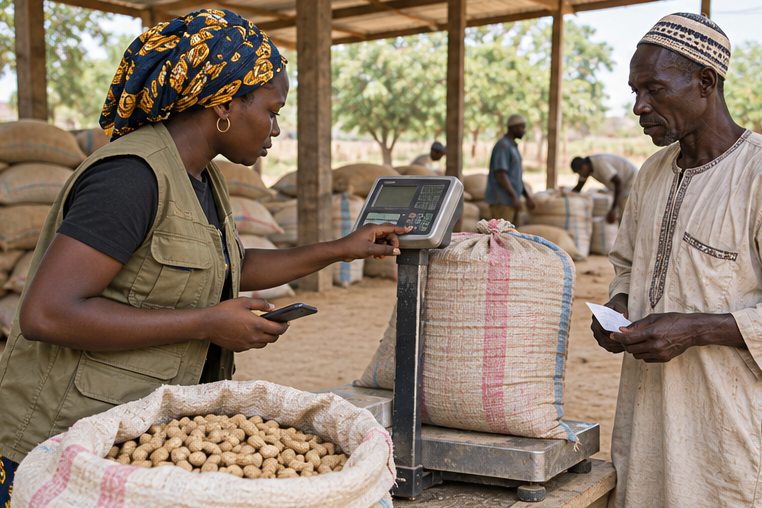
Picture a groundnut collection point near Kaolack. A grower brings six sacks, the agent weighs them and a truck takes them to the depot. If the phone loses its connection between weighing and issuing a receipt, whose weight will the depot accept? Settle that question with the grower, the agent and the storekeeper before designing the screen.
Start at the scale
Give each delivery a reference that the phone can issue offline. Record the collection point, grower reference, sack count, net weight and unit. Keep the sack count and weight in separate fields. Read back the weight in the grower’s preferred language and put the same reference on the grower’s paper receipt. If a reading is disputed, record the second weighing and who accepted it.
Follow one receipt to the depot
Show the agent whether the record is saved on the phone or acknowledged by the depot. When the phone reconnects, resend it with its original reference. The depot should acknowledge a receipt it already holds without adding that weight a second time. ODK Collect’s distinction between a completed form and a sent form is a useful starting point for the workflow.
Try one collection day with the paper register alongside the app. Before the truck leaves, record the total net weight assigned to that load. At the depot, compare that figure with the arrival weight, then use the receipt references to investigate differences. A torn sack needs a different response from a submission still sitting on an agent’s phone. The pilot is ready to expand when the team can tell the two apart and explain each unresolved difference to the grower.
Près de Kaolack, imaginons un producteur qui apporte six sacs d’arachides. L’agent les pèse, puis un camion les emporte au dépôt. Si la connexion se coupe entre la pesée et la remise du reçu, quel poids le magasinier retiendra-t-il ? Avant de dessiner le premier écran, mettez le producteur, l’agent de collecte et le magasinier autour de la même table.
Commencer à la balance
Attribuez à chaque livraison un numéro que le téléphone peut délivrer hors ligne. Relevez le point de collecte, la référence du producteur, le nombre de sacs et le poids net avec son unité. Prévoyez deux champs distincts pour les sacs et les kilos. Annoncez le poids dans la langue choisie par le producteur et inscrivez le même numéro sur son reçu papier. En cas de contestation, gardez la seconde pesée et le nom de la personne qui l’a validée.
Suivre un reçu jusqu’au dépôt
L’agent doit pouvoir distinguer un reçu enregistré sur son téléphone d’un reçu dont le dépôt a accusé réception. Au retour du réseau, le téléphone renvoie le numéro d’origine. Si le dépôt le connaît déjà, il confirme la réception sans ajouter les kilos une seconde fois. La distinction que fait ODK Collect entre formulaire finalisé et formulaire envoyé donne un bon modèle.
Pendant une journée de collecte, gardez le registre papier en parallèle. Avant le départ du camion, additionnez les poids nets de son chargement. À l’arrivée, comparez ce total à la pesée du dépôt et remontez aux reçus en cas d’écart. Un sac déchiré et une saisie restée sur le téléphone appellent deux réponses différentes. Étendez le pilote quand l’équipe sait les distinguer et expliquer au producteur tout écart encore ouvert.